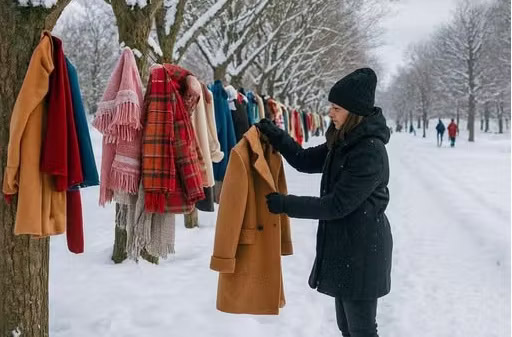
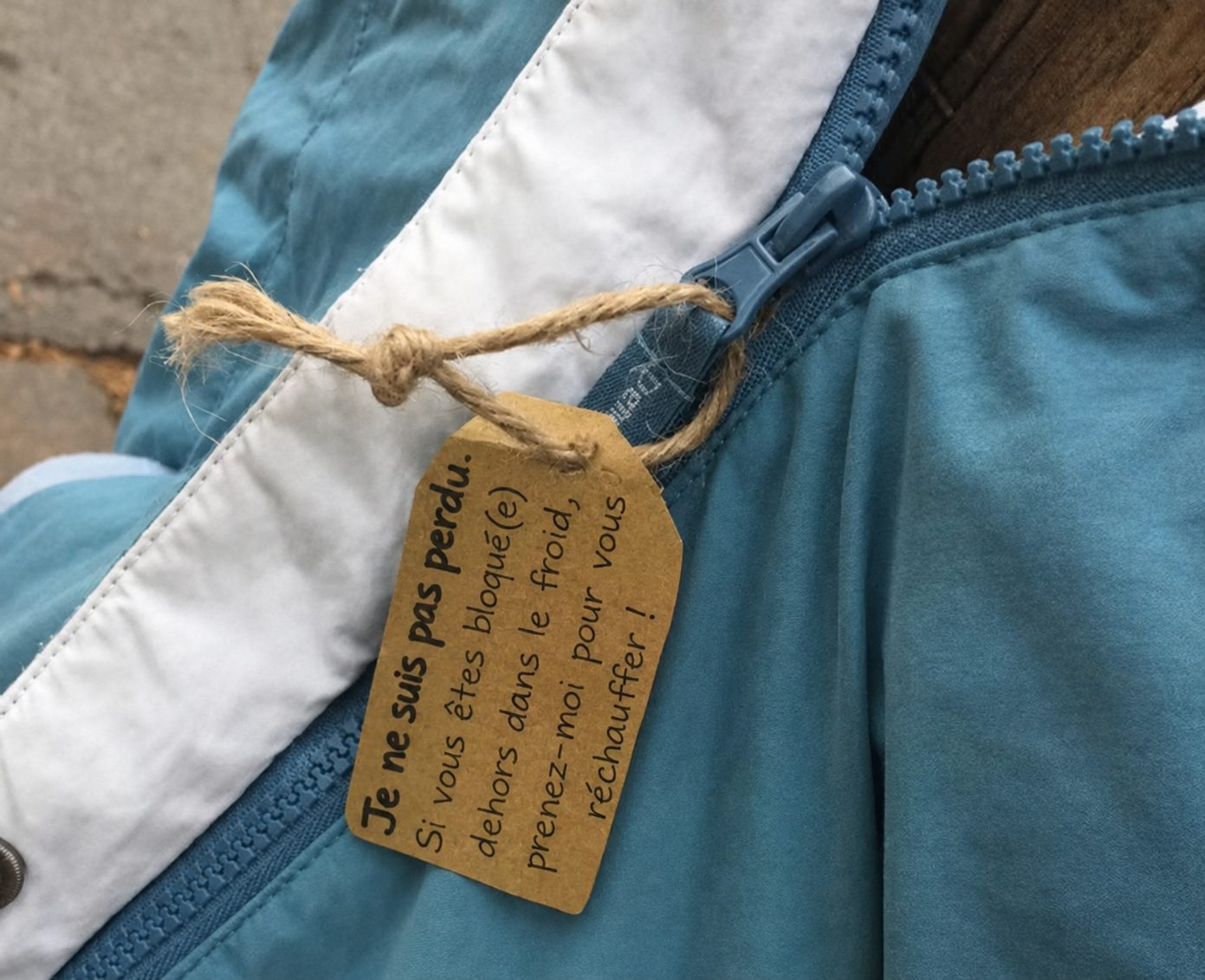
Halifax, Toronto, and other Canadian cities have a tradition that repeats itself every time the first major cold snap of the year arrives: neighbors hang coats, scarves, and gloves from trees on the street so that anyone experiencing homelessness can take them without having to ask. What makes the gesture special is not just the clothing itself, but the small signs sewn onto many of the garments: “I’m not lost, take me if you’re cold.” This phrase is designed so that those who need the clothing don’t feel ashamed to take it. No forms, no intermediary organizations, no conditions. The initiative grows spontaneously with each extreme cold wave, and over the years, it has become a silent symbol of what a community can do when it decides that no one should freeze on the street while others have extra clothing. Read more
Canadians have found a way to help homeless people without them having to ask for anything.
In Halifax, Toronto, and other Canadian cities, winter clothing is hung from trees to help those in need. Without intermediaries or formal arrangements, this anonymous gesture transforms public spaces into symbols of winter solidarity.
In several Canadian cities, such as Halifax and Toronto, a discreet yet profoundly humane initiative resurfaces as soon as temperatures drop. Coats, scarves, and gloves appear hanging from trees on sidewalks, ready to be used by anyone in need. Without registration, requests, or intermediaries, this spontaneous gesture transforms public spaces into places of mutual aid. But how did this simple idea become a symbol of winter solidarity?
A tradition of solidarity that returns every winter
In several regions of Canada, this type of initiative reappears with the first cold snaps, when residents feel the temperatures are becoming unbearable for people experiencing homelessness. Cities like Halifax and Toronto see the emergence of a spontaneous movement where neighbors decide to hang warm clothing in public spaces. This practice is not organized by any official institution but relies entirely on the generosity of residents, who act independently and without expecting anything in return. This collective gesture is particularly prevalent in residential neighborhoods where residents want to act quickly in response to needs visible in their daily environment. It's not just about donating clothes, but also about creating a discreet connection between residents and people experiencing hardship. This type of initiative is especially visible in large cities where social inequalities make needs more apparent in public spaces. Residents often explain that it takes very little to make a tangible difference in someone's daily life. For many residents, this practice also represents a simple way to strengthen neighborly ties within their community.
Clothing accessible without conditions
The principle is simple: coats, scarves, and gloves are hung from trees or fences, often in bags or on hangers, so that anyone can take them freely. Small messages are sometimes added to the clothing, such as "I'm not lost, take me if you're cold," to encourage those in need to help themselves without shame. No forms, no administrative procedures, and no conditions are imposed: the goal is to make help immediate and accessible to all. Residents often take care to choose clean clothes in good condition and appropriate for the season to ensure immediate use. This attention to detail shows that the initiative is based as much on goodwill as on a desire for concrete effectiveness. In some cases, entire families participate by sorting their clothes to give them a useful second life. The absence of intermediaries allows for direct and immediate action, making the aid particularly effective on very cold nights. The hanging clothes are generally protected from the rain thanks to locations carefully chosen by the residents. This focus on practicality ensures that the items remain usable by those who need them.
A symbol of solidarity that grows stronger with each winter.
Over time, this initiative has grown and spread to several neighborhoods, driven by residents themselves during periods of extreme cold. It has become a discreet yet powerful symbol of solidarity, demonstrating that a simple gesture can help meet urgent needs without complex organization. For many, this initiative illustrates a concrete way to care for others in public spaces, especially when temperatures become extreme. Without mediation or registration, it serves as a reminder that solidarity can also arise from simple, visible actions accessible to everyone in the street. Every year, with the arrival of the first cold snaps, residents renew these spontaneous installations without any central organization coordinating them. This phenomenon also illustrates the importance of public spaces as places of informal solidarity where everyone can contribute according to their means. This informal approach is also appreciated because it requires no registration or complicated procedures for those who benefit. It thus allows for a rapid response to urgent needs without going through institutional structures. Over the years, this tradition has become ingrained in some cities as a reflex of solidarity as soon as winter arrives. It is sometimes shared on social media, which helps encourage new residents to participate.
.webp)
.webp)



.webp)


.webp)

0 Comments:
Post a Comment