
You've enthusiastically sown your tomato seeds, but the seedlings seem to be taking forever to grow? Thin stems, still-developing leaves, transplants that seem to be falling further and further away… Don't worry, this scenario is very common. The good news is that with a few simple adjustments and some clever home remedies, it's possible to give your plants a real boost without any special equipment or harsh chemicals. And it all starts with understanding what they really need.
Light and temperature: the duo that changes everything

When young tomato plants are struggling, the problem very often stems from a lack of light. These plants need plenty of sunlight, and above all, intense and consistent light. Behind a north-facing window, they do what they can, but it's not enough. Place them near a south- or west-facing window or, if necessary, under a grow light that's on for several hours a day.
Temperature also plays a key role. If it's too cold, plants slow their growth. If it's too hot, they weaken. The ideal temperature is between 18 and 24°C, close to that of a living room. A bright conservatory, a garden greenhouse, or even a well-lit, unheated room can make all the difference.
The trick to the ultra-simple homemade mini-greenhouse
No greenhouse available? A simple plastic bottle can serve as an effective solution. By cutting it open and placing it over the plant, you create a very useful mini-greenhouse effect. Heat and humidity are better retained, while still allowing light to pass through.
The result: the young plants feel protected, grow faster, and better withstand temperature variations. It's a bit like offering them a transparent covering, ideal for the still-cool early stages of the season.
A natural boost to stimulate growth
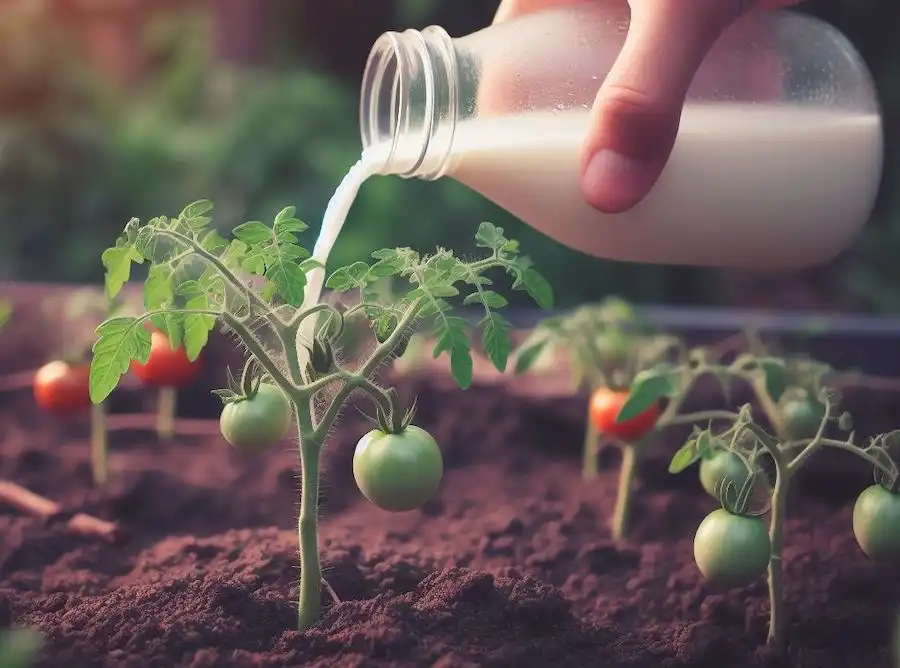
When plants seem to lack vigor, occasional natural support can help them recover. There is a simple homemade preparation, to be used sparingly, that effectively supports the growth of young tomatoes.
It combines three common ingredients:
- Yeast, known to stimulate microbial activity in the soil.
- Milk, which provides nutrients and supports the overall balance of the plant.
- Sugar, which serves as a source of gentle energy for microorganisms.
The preparation is quick: mix 10g of dried yeast and a tablespoon of sugar in 100ml of milk, then dilute the mixture in 1 liter of water. This solution is used only once, as a light watering at the base of the plants, a few days before they are permanently planted in the vegetable garden. It's a natural boost , not a regular application.
Knowing when to transplant

Patience is key in the garden. A tomato seedling ready for transplanting is usually between 15 and 20 cm tall and has several well-developed true leaves. At this stage, the stem is sturdier, the root system is well-formed, and the plant is able to adapt to its new environment.
Transplanting too early risks slowing growth instead of promoting it. It's better to wait a few more days than to rush this step.
Hardening, the often-forgotten step
Before being permanently planted outdoors, young plants need a gradual acclimatization period. This hardening-off phase involves taking them outside for a few hours each day, in a sheltered spot protected from wind and cold. The duration is gradually increased over a week. This transition significantly reduces transplant shock and promotes rapid establishment once the plants are planted in the ground. With a little observation, gentle care, and these easy-to-follow tips, your young tomato plants will gain vigor… and you'll gain confidence, season after season.


.webp)


.webp)

0 Comments:
Post a Comment