.webp)
In our comfortable homes, the idea of sleeping on the floor might seem uncomfortable, even unthinkable. Yet in Japan, this habit is not only common, but also seen as beneficial in many ways. So why do so many Japanese households favor this age-old practice? And what can we learn from it for our own comfort? Spoiler alert: it's much more than just a matter of space…
A real space saver on a daily basis
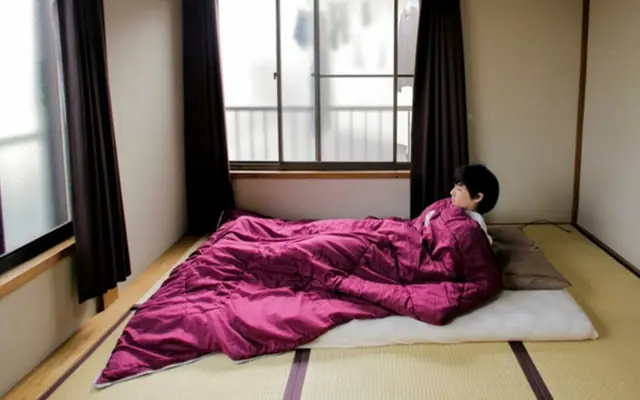
In a country where every square meter counts, ingenuity is key. That's where tatami mats come in. These traditional Japanese mats , made of compressed rice straw, are not only aesthetically pleasing: they transform any room into a bedroom or living room, depending on the needs of the moment.
Imagine: in the morning, you fold up the thin mattresses (the famous futons ), and the room transforms back into a bright and airy living space . As a bonus, Japanese homes are often equipped with underfloor heating or highly efficient heating systems , creating a warm atmosphere even in winter. The result? A flexible, minimalist, and inviting interior.
A reassuring solution for children

What parent hasn't dreaded a nighttime fall out of bed? In Japan, this anxiety is avoided by simply eliminating… the bed. Sleeping on the floor allows toddlers to move freely and safely. They can roll, crawl, stretch, all without the risk of falling from a great height.
This sleeping arrangement is therefore not only clever , but it also reassures parents, who know their children are safe, even in the middle of the night.
A useful habit in case of an earthquake
Japan is a country where nature regularly reminds us of its power, particularly through earthquakes. Faced with this reality, interiors are designed for rapid response: minimal furniture, nothing superfluous. And above all, sleeping close to the ground allows one to immediately feel the tremors and react within seconds.
No need to get out of bed or search for your bearings in the dark: everything is designed to facilitate evacuation . A lesson in minimalism… practical and inspiring.
Unexpected health benefits

If you suffer from back pain or often wake up sore, sleeping on a firm surface could make a difference. Many Japanese believe that a mattress that is too soft misaligns the spine and worsens pain.
Japanese futons , thin yet supportive, distribute body weight more evenly and encourage good posture while sleeping. And the pillows? Sometimes filled with buckwheat hulls , they may feel firm at first… but offer optimal support for the neck and head.
A little extra : this type of bed is particularly appreciated by seniors, who thus avoid loss of balance when getting out of a bed that is too high.
A more natural awakening
It's a proven fact: the softer the bed, the harder it is to get out of. So, what if the solution to starting the day right was a simpler bed? Sleeping on the floor, with fewer unnecessary layers, helps regulate body temperature and avoid those difficult awakenings.
The result: a more alert awakening, less snoozing , and more stable energy from the morning onwards. Everything you need to start your day off right.
A tradition that spans the centuries
Beyond its practical and wellness aspects, sleeping on the floor is above all a tradition deeply rooted in Japanese culture. For generations, this simple and harmonious way of life has embodied a certain art of living: that of keeping things simple, staying connected to one's environment, and prioritizing what is essential.
What if, deep down, this simplicity was the key to comfort?


.webp)


.webp)

0 Comments:
Post a Comment