.webp)
Imagine an asteroid heading towards Earth... 2024 YR4, under close observation by NASA, is causing increasing concern with a 2.3% probability of impact. Which countries could be affected by this "city destroyer"?
2024 YR4: A colossus under close surveillance
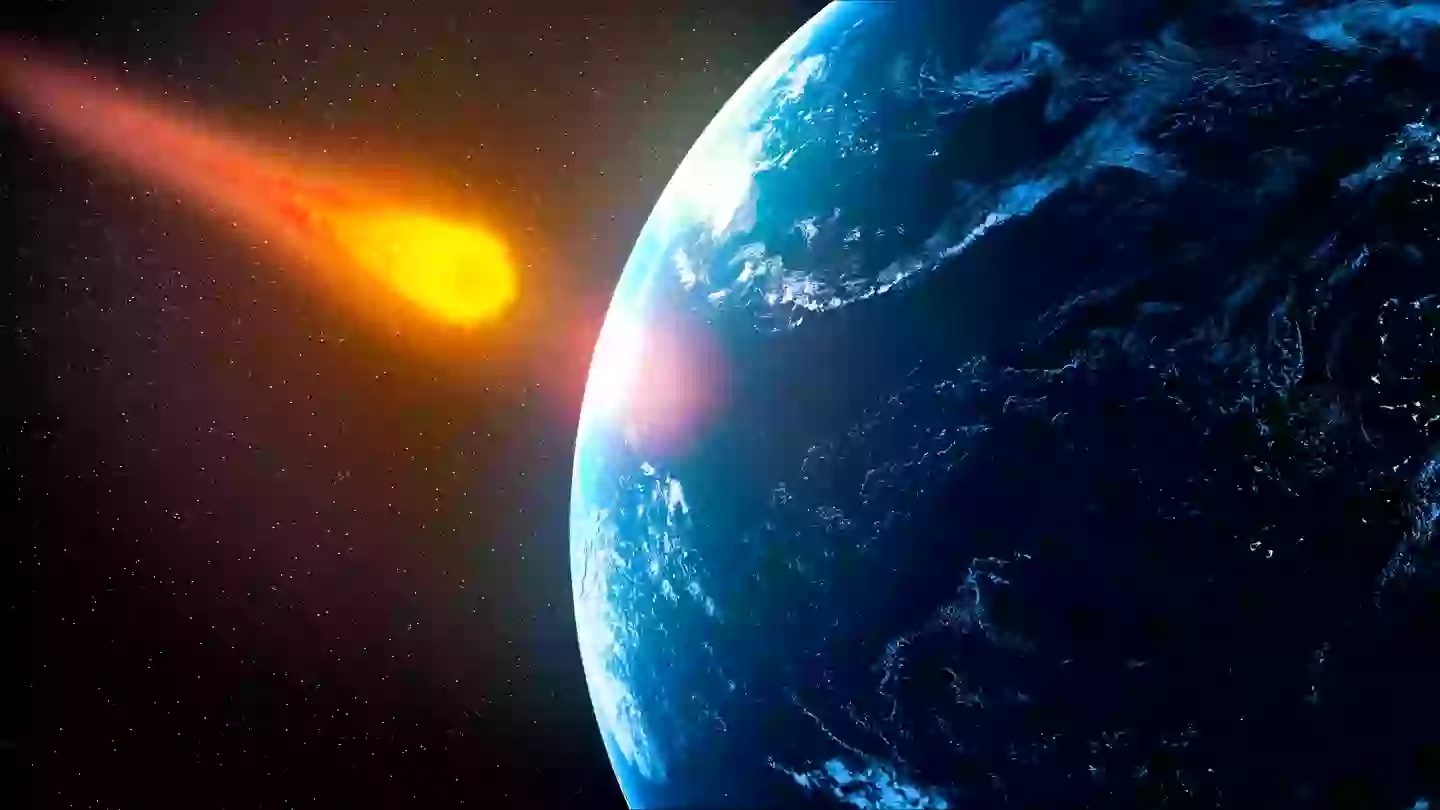
Asteroid 2024 YR4 is familiar to astronomers. Its recent discovery was followed by a close approach to Earth on December 25, 2024 , at a distance of approximately 828,800 kilometers . This event, which had no major impact, foreshadows its next close approach in December 2032 , this time significantly closer.
With an estimated diameter of between 40 and 100 meters, this asteroid is large enough to cause considerable damage in the event of a collision. Nicknamed the "city destroyer," it would not cause the extinction of humanity but could lead to significant destruction on a regional scale.
Identification of a risk zone

NASA scientists have identified a "risk corridor," a theoretical area where the asteroid could collide with Earth if its trajectory takes it in our direction. According to their estimates, the potentially affected countries extend from South America to Africa, passing through the Pacific Ocean and South Asia.
The nations exposed include:
- South America : Venezuela, Colombia, Ecuador
- Asia : India, Pakistan, Bangladesh
- Africa : Ethiopia, Sudan, Nigeria
These estimates remain preliminary and will be refined through future NASA observations.
The consequences of a potential collision

An asteroid of this size entering the atmosphere at a speed of 17 kilometers per second (approximately 38,000 km/h ) would trigger an explosion of considerable power, equivalent to several megatons of TNT.
The repercussions would vary depending on the location of impact:
- At sea : a tsunami could be generated, affecting nearby coastal areas.
- On land : a devastating explosion, capable of destroying an entire city and triggering fires over several kilometers.
However, NASA wants to reassure the public: the risks remain very low and could be further reduced through new observations.
A legitimate source of concern?
Currently, the probability of a collision remains minimal, and NASA is maintaining its monitoring of asteroid 2024 YR4. Many asteroids considered threatening in the past have been removed from the list of hazards after more precise observations.
Astronomers now have advanced technologies to track and analyze these celestial objects. In the event of a proven threat, solutions such as deflection using a kinetic impactor (successfully tested during the DART mission in 2022) could be considered.


.webp)


.webp)

0 Comments:
Post a Comment