.webp)
You come across a simple addition problem like "50 + 10 × 0 + 7 + 2" and think: easy, a no-brainer. Yet, behind this apparent simplicity lies a classic trap that's easy to fall into… What if we told you the answer isn't 9 but 59? Surprising? Then stay with us, we'll explain everything!
The secret to not making a mistake: the BODMAS method
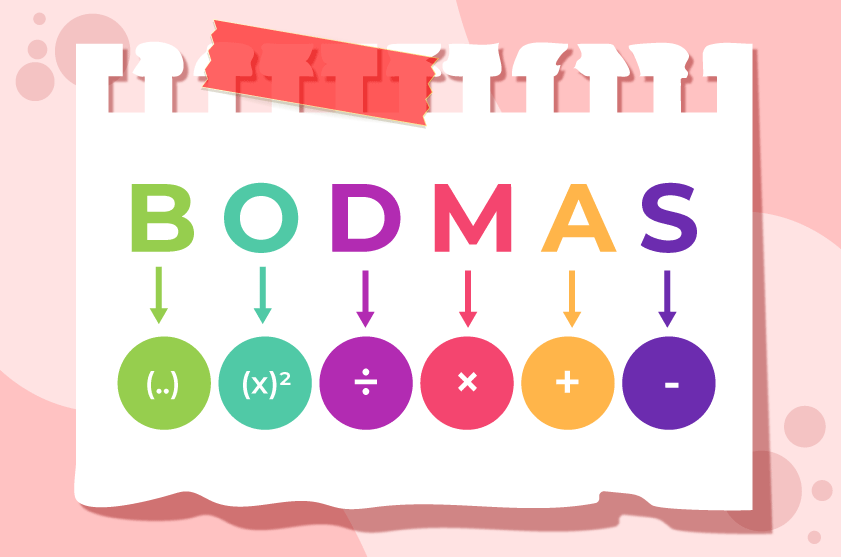
Before diving into the calculations, a quick reminder is in order. In math, the order in which operations are performed is not random. And to remember this, there's a very practical mnemonic : BODMAS .
Here's what that means:
- B for Brackets → Parentheses
- O for Orders → Powers, square roots
- D for Division
- M for Multiplication
- A is for Addition
- S for Subtraction
In short, we always start with what's in parentheses, then exponents if there are any, then division and multiplication, and finally, we finish with addition and subtraction. Important: multiplication and division have the same order of operations – they are performed from left to right, just like addition and subtraction.
The expression to solve: 50 + 10 × 0 + 7 + 2

No parentheses or exponents here, so we go straight to multiplication:
10 × 0 = 0
The expression then becomes:
50 + 0 + 7 + 2
We continue with the addition, from left to right:
- 50 + 0 = 50
- 50 + 7 = 57
- 57 + 2 = 59
Final result: 59
What many people do… by mistake
Did you get a 9 ? Don't worry, you're far from alone ! It's a common mistake , often due to a mental reflex: reading from left to right and adding too quickly without thinking about priorities . Except that this goes against the Bodmas logic , and that's where the mistakes happen.
The visual trick to never make a mistake again
Imagine a pyramid:
- At the very top: Multiplication and Division
- Below: Addition and Subtraction
Priority always goes to the top. If a multiplication problem intersects an addition problem, the multiplication problem takes precedence, regardless of its position in the row . This simple mental model is very effective !
Why it's useful in everyday life
It's not just about shining in math class or helping children with their homework. Understanding and applying the BODMAS method also means refining your logic , developing structured reasoning , and avoiding the traps of logic games or puzzles that are often seen on social media .
And frankly, it's always nice to find the right answer and understand the reasoning behind it .


.webp)


.webp)

0 Comments:
Post a Comment