.webp)
Do you have a child born between 1980 and 1999 who sometimes seems elusive? Their choices, intense emotions, and profound questions can be perplexing. But what if it all had meaning?
Carl Jung's psychology offers a surprising insight into understanding this generation in search of authenticity and helps you to support them without restricting them.
Growing up between two worlds: the dilemma of this generation
Imagine growing up in a world where traditional reference points are beginning to crumble, just as the internet and new technologies are redefining everything. This is exactly the context in which children born between 1980 and 1999 grew up.
Their childhood seemed ordinary, with clear expectations surrounding school, family, and friends. Then the ground shifted slightly beneath their feet. Certainties crumbled, and rigid rules gave way to negotiation and constant change.
This dual influence — respect for traditions and openness to progress — creates young adults who are both attached to old ways of doing things and curious about new experiences, often misunderstood by their loved ones.
Their inner world, the driving force behind their uniqueness
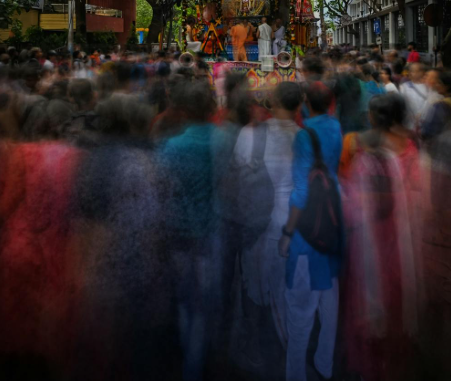
Carl Jung explained that during periods of transition, individuals naturally turn inward. This is not a sign that something is "wrong," but rather that something new is being built.
For this generation, this translates into early questioning, difficulty with superficial routines, and a rejection of lives that seem perfect but are devoid of authenticity.
Vivid dreams, intense emotions, or moments of sudden lucidity are not insignificant. According to Jung, they are messages from the psyche, the way our unconscious speaks to us when words are insufficient. Ignoring them can lead to anxiety , persistent fatigue, or a feeling of disconnect—signs that inner tension is demanding attention.
The shadow: understanding what is repressed
A key concept in Jung's philosophy is the "shadow" : those parts of ourselves that we sometimes prefer to ignore. This generation is less inclined to repress its emotions or contradictions. Integrating the shadow, rather than denying it, fosters maturity and a deeper authenticity.
For parents, this can be unsettling. Instinct often pushes us to correct or normalize, but rigid control doesn't work. The key lies in listening, being present, and being patient. Providing a safe space while allowing questions to surface without judgment transforms guidance into support rather than pressure.
Transforming sensitivity into strength
What may appear as a loss of bearings or instability is actually a phase of inner construction. According to Jung, these children are searching for harmony between reason and intuition, permanence and evolution, inner life and external reality.
Parents have a crucial role: to be attentive, to ask questions without imposing answers, and to encourage personal exploration.
With patience and kindness, these young people can transform their sensitivity into strength , their questioning into motivation, and their quest for authenticity into a true path in life.
The generation born between 1980 and 1999 is not lost: it is still developing, and your support can make all the difference.


.webp)


.webp)

0 Comments:
Post a Comment