
THE GARDEN THAT BECAME THE BACKDROP OF HISTORY
Every time an American president steps outside the White House to make a major announcement, welcome a foreign leader, or address the nation, millions of people see the same familiar setting behind them: a perfectly arranged garden of green lawns, colorful flowers, and carefully placed trees. It has become one of the most recognizable landscapes in American public life.
But the Rose Garden that generations have come to know was not created by a professional landscape architect with decades of formal training. It was designed by a woman who never considered herself an expert and who initially believed she was not qualified for the task.
Her name was Rachel Lambert Mellon, known to friends as Bunny Mellon.
In 1961, President John F. Kennedy returned from a trip to Europe with a clear vision. He had seen beautiful gardens surrounding historic European buildings and wanted the area outside the Oval Office to become something more useful and welcoming. The existing White House garden did not provide enough space for ceremonies, receptions, or gatherings. It was a place to look at, but not a place to truly use.
Kennedy imagined something different.
He wanted a garden that could become an extension of the presidency itself.
JACKIE KENNEDY’S FRIEND WHO NEVER EXPECTED TO MAKE HISTORY
The person who helped bring that vision to life was Jacqueline Kennedy’s close friend Bunny Mellon. She was not a formally trained landscape designer. She had never attended a professional design school or worked for a major firm.
Instead, she developed her knowledge through years of personal study, observation, and an extraordinary understanding of plants.
Mellon had a natural ability to see how gardens could feel rather than simply how they could look. She understood balance, color, seasons, and the emotional effect of a carefully planned landscape. She believed a garden should not feel artificial or overwhelming. It should feel timeless, peaceful, and connected to its surroundings.
When Jackie Kennedy approached her about redesigning the Rose Garden, Mellon reportedly questioned whether she was the right person for such an important project. Designing a garden for the White House was not a normal assignment. It was a place where presidents would stand before the world.
Yet she accepted the challenge.
And the woman who doubted her own qualifications created one of the most famous gardens on Earth.
A DESIGN BUILT FOR BOTH BEAUTY AND HISTORY
Bunny Mellon’s design transformed the space into something far more functional. At the center was a large open lawn, wide enough to accommodate ceremonies, speeches, and official events. Surrounding it were carefully arranged flower beds and pathways designed to create a sense of elegance without overwhelming the historic building nearby.
She incorporated crab apple trees and selected plants that would provide color across multiple seasons, ensuring that the garden would remain beautiful throughout much of the year.
The goal was not simply decoration.
It was creating a living stage for American history.
The garden allowed presidents to step outside the traditional walls of the Oval Office and speak directly to the public in a setting that felt both formal and human.
When construction was completed in 1962, nobody could have known how many historic moments would unfold there in the decades ahead.

A QUIET FRIENDSHIP THAT SHAPED THE PRESIDENTIAL LANDSCAPE
The story of the Rose Garden is also a story about friendship.
Bunny Mellon and Jacqueline Kennedy shared an appreciation for beauty, tradition, and thoughtful design. Their collaboration was not about creating something flashy. It was about preserving a sense of dignity and grace around one of the most important buildings in the world.
The project reflected something deeply personal about Jackie Kennedy’s approach to the White House. She believed history was not only found in documents and speeches. It was also found in architecture, gardens, art, and the spaces where people gathered.
The Rose Garden became a reflection of that belief.
It was elegant without being excessive.
Important without feeling distant.
A place where power and humanity could exist together.
THE SAME WOMAN WHO CREATED A PRESIDENTIAL GARDEN HELPED SHAPE A FINAL RESTING PLACE
One of the most remarkable parts of Bunny Mellon’s story is that her work with the Kennedy family did not end with the Rose Garden.
Eighteen months after the garden’s completion, history took a heartbreaking turn. President Kennedy was assassinated in November 1963.
After his death, Mellon was asked to help design the planting around his grave at Arlington National Cemetery.
The connection between the two projects is deeply symbolic.
The same woman who helped create a place where Kennedy would speak to the living also helped design the landscape surrounding the place where the nation would remember him.
One garden represented a presidency in motion.
The other represented a life that had ended too soon.
Both were shaped by the same careful hands and the same friendship.
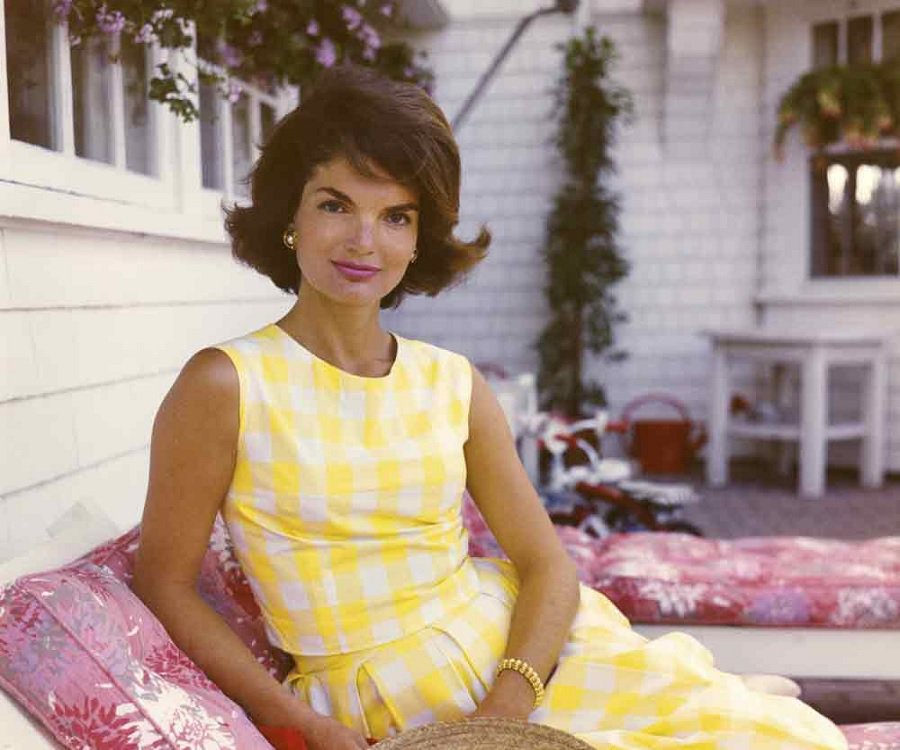
A LEGACY THAT CONTINUES THROUGH EVERY PRESIDENTIAL ADDRESS
Today, every president who stands in the Rose Garden becomes part of a tradition that began with two women sitting together and imagining what the space could become.
The garden has witnessed announcements of national importance, diplomatic ceremonies, and moments that became part of American memory. Cameras have captured countless historic scenes there, but few people know the story of the woman behind the setting.
Bunny Mellon never sought fame for the design.
She was not interested in recognition.
Her satisfaction came from creating something meaningful that would outlast her.
The garden was not about the person who designed it.
It was about the moments that would happen there.
THE WOMAN WHO PROVED VISION MATTERS MORE THAN TITLES
Bunny Mellon’s story is a reminder that history is not always shaped by people with official titles or traditional credentials. Sometimes it is shaped by individuals who see possibilities others overlook.
She was a self-taught gardener who believed beauty could influence how people experience important moments. She created a space where presidents could announce decisions, where leaders could meet, and where the country could witness history unfold.
The Rose Garden stands today not only as a beautiful part of the White House grounds, but as a symbol of imagination, friendship, and quiet influence.
Every flower bed, every tree, and every ceremony held there carries a piece of the vision created by two women who believed that even a garden could become part of a nation’s story.
And perhaps the most remarkable detail is this:
One of America’s most famous gardens was created by a woman who never believed she was qualified to design it.
Yet generations later, the world still stands inside her vision.


0 Comments:
Post a Comment