Why were no bodies found in the wreckage of the Titanic?
Why were no bodies found in the wreckage of the Titanic?
More than a century after the sinking of the famous ocean liner, one question keeps resurfacing: how is it that, despite numerous underwater explorations, no human remains have been found at the bottom of the ocean? The story of the Titanic continues to fascinate, and this "mystery" fuels the collective imagination. Yet, the explanations are far more natural than one might think—and you'll see that they beautifully illuminate this little-known aspect of the adventure.
An impressive discovery… but different from what we imagined.
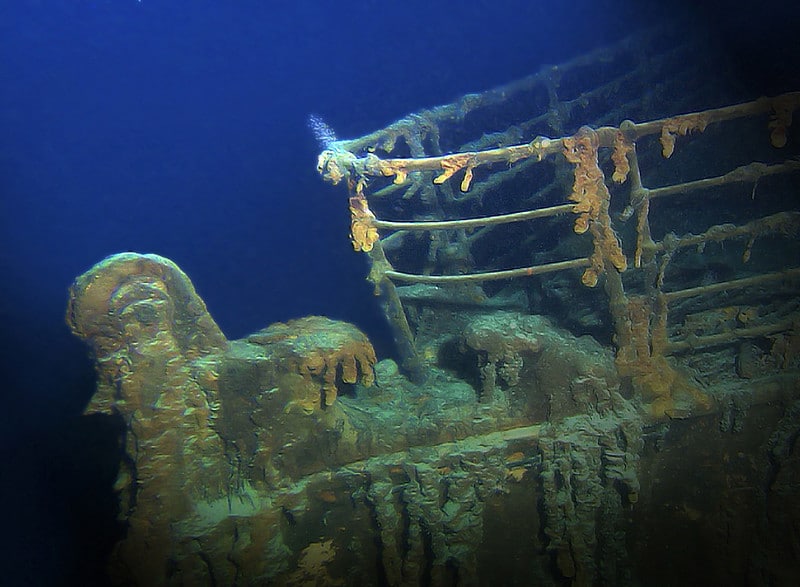
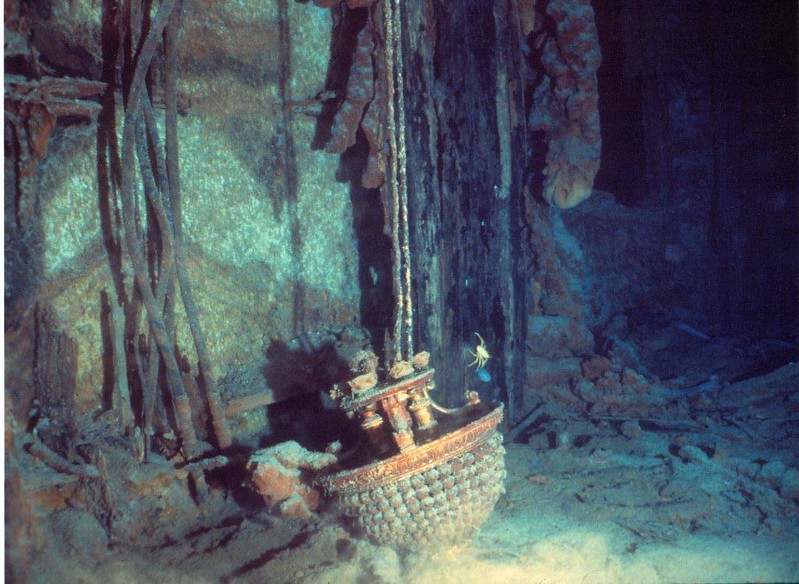
When the wreck was located in 1985, explorers expected to see everything again: objects, structures, but also more direct evidence of the passengers' presence. Instead, they found a veritable time capsule made of intact dishes, collapsed furniture, shoes, and suitcases resting in almost solemn silence. No human remains, however.
Even James Cameron, during his many dives to prepare for his film, confirmed that he never saw anything other than scattered clothes and accessories.
So why are these objects still here, but not the rest?
The scientific explanation: an extreme environment that transforms everything
The bottom of the North Atlantic is another world: dark, icy, subject to colossal pressure. Nothing like the calmer, shallower waters we often imagine.
In this environment, everything evolves differently. Experts explain that at depths greater than 3,600 meters, biological activity is intense: tiny marine organisms rapidly transform organic matter, regardless of its type or origin. This natural process is part of the life cycle in the deep sea.
Even elements considered resistant, such as limestone structures, eventually dissolve little by little in these waters, which are poor in stabilizing minerals. This is why no lasting traces have survived, while objects like shoes—made of different materials—have endured for decades.
By comparison, in seas with low biological activity, some human remains can survive for a very long time. This is simply not the case in the North Atlantic.
The objects: the last witnesses of the ocean liner
Where human traces have naturally faded away, personal objects still tell part of the story. In the “debris field” — an area extending for several kilometers around the wreck — shoes, suitcases, porcelain, buttons, and pieces of furniture can be found.
These objects form the last material traces of those who traveled that night. They constitute a touching link between history and the present, a gentle way of imagining life on board without going into sensitive details.
Explorers often speak of this unique sensation: that of an immense silence, where every object seems frozen in time, as if the ocean had chosen to preserve what it could.
And the Titanic itself? A giant slowly disappearing.
The wreck of the Titanic is not static: it evolves year after year. Specialists observe that it is transforming under the influence of specialized microorganisms that attack the metal. This natural process is gradually weakening the structure, to the point that some believe that in a few decades, only a field of rusty traces scattered on the seabed will remain.
Again, nothing mysterious: it's simply underwater life.
A natural death, a memory that lives on
The absence of bodies in the wreck is therefore not a mystery, much less an enigma. It is the result of an extreme environment that transforms everything at its own pace, following its own laws. Objects have remained, the structure changes, but memory endures.
More than just an underwater site, the Titanic has become a symbol: that of human stories, hopes, intertwined destinies and the lasting fascination that this legendary ship still inspires.
Because sometimes the ocean erases traces… but never stories .
.webp)



0 Comments:
Post a Comment