What does it mean to hear crows cawing near your home?
Their cry intrigues as much as it fascinates… but behind the cawing of crows lies a simple and reassuring reality. What if their presence were simply a perfectly explained natural behavior?
Their raucous cry echoes through the air, and instantly, a question crosses our minds: why here, why now? Crows fascinate as much as they intrigue, often shrouded in mystery and symbolic interpretations. Yet, behind this sometimes impressive cawing lies a reality far simpler… and above all, much more reassuring than we imagine.
Why are crows cawing near your house?
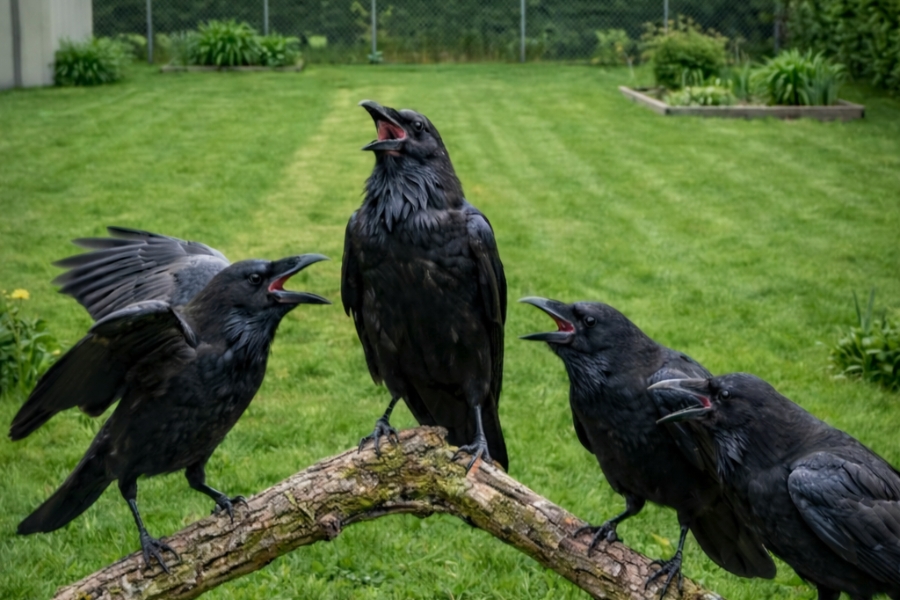
Hearing crows cawing in broad daylight may seem surprising, especially when several birds gather in the same place. In reality, these sounds are part of their natural mode of communication.
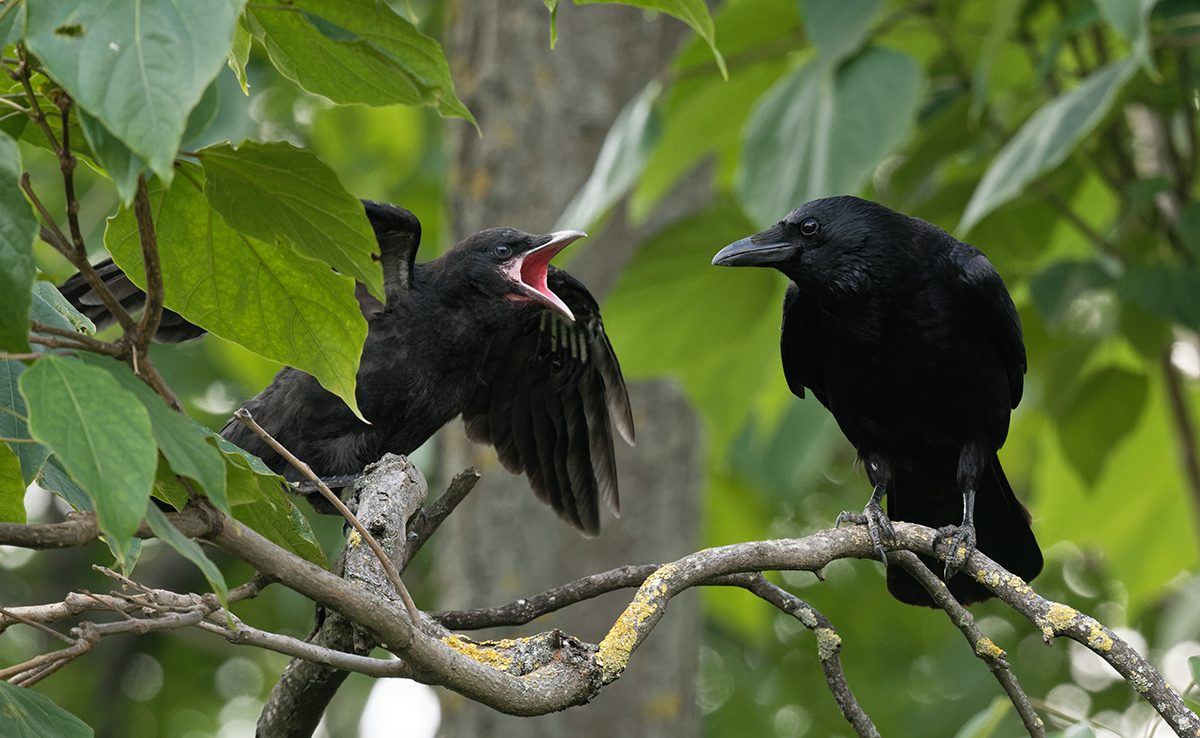
Crows don't sing like other birds: they use a variety of calls to exchange information. These vocalizations can signal danger, indicate the presence of food, or simply maintain contact with the group.
In other words, this noise which may seem disturbing is in fact a perfectly structured language.
Very intelligent and observant birds
Crows are among the most intelligent birds. They are capable of memorizing places, recognizing faces, and even adapting their behavior based on past experiences.
If you see them regularly around your house, it's not a coincidence. They have probably identified your environment as interesting or favorable to their needs.
Their presence often indicates a place rich in resources or offering a good vantage point.
What attracts crows to your garden
Several factors can explain their presence near your home. The first factor is food. Crows are opportunistic and can be attracted by food scraps, insects, or small items found in gardens.
They also look for elevated locations, such as rooftops or trees, which allow them to safely monitor their surroundings.
Finally, a calm and undisturbed environment can become an ideal gathering point for these birds.
A highly organized group behavior
Crows rarely live alone. They live in groups and develop collective strategies for protection and food.
When several crows caw together, it is often a sign of coordination between them. Some are keeping watch while others are exploring or resting.
To our ears, their cries may sound identical, but they actually have different meanings depending on the situation.
Should we see this as a particular sign?
Crows have long been associated with mysterious symbols in some cultures. Their dark color and intelligence have contributed to the creation of many beliefs surrounding them.
But today, no study shows that they carry a particular message or announce anything. Their presence is simply explained by their ability to adapt to their environment.
They are first and foremost animals that organize themselves to survive and take advantage of available resources.
A sign of nature's adaptation
Rather than seeing it as something worrying, the presence of crows can be perceived as a sign of balance between nature and inhabited areas.
These birds are increasingly adapting to urban and suburban environments. Their ability to coexist with humans demonstrates how well some species can evolve with the times.
Although their cry may be surprising, it is simply part of the natural soundscape.
How should we react to their presence?
There's no need to worry or try to systematically chase them away. If their presence becomes too frequent, a few simple actions can limit their establishment, such as avoiding leaving food accessible outside.
In most cases, they are just passing through or observing their surroundings before leaving.
Ultimately, behind their intriguing cawing, crows simply remind us that nature continues to thrive… even close to us. Their behavior and presence then become easier to understand.
.webp)
.webp)



.webp)


.webp)


0 Comments:
Post a Comment